A Safe Place
This website was created to give the community more information about Anxiety, how to deal with it, and other helpful resources.
DISCLAIMER: The information given is research we have found on different platforms and what we have personally conducted. To give credit to the organizations and websites, the links will be on the "Credits" page.
Thank you
What is anxiety?
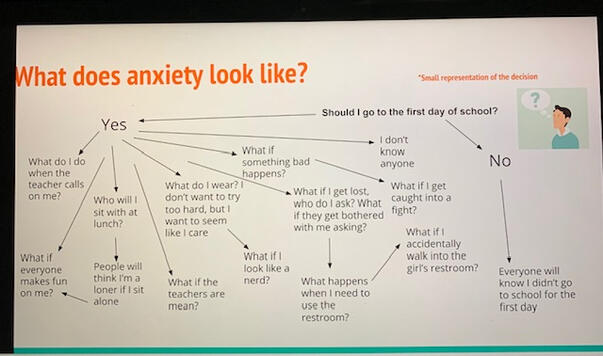
Anxiety is the body's reaction to uncomfortable, dangerous, or any unfamiliar surroundings or scenarios.
People typically have a sense of dread, panic, and uneasiness before a big event, project, meeting, etc.
What causes anxiety?
Some things that cause anxiety:
-Genetics
-Stress
-Medical Conditions (Heart disease, diabetes, respiratory disorders)
-Being in an unhealthy environment such as a relationship of any kind or sometimes even school or work.
-Drugs and alcohol have a big impact as they alter the mental status of a person, it can either calm them down or increase their energy levels, activity levels, emotions, and stress levels.
How common is it?
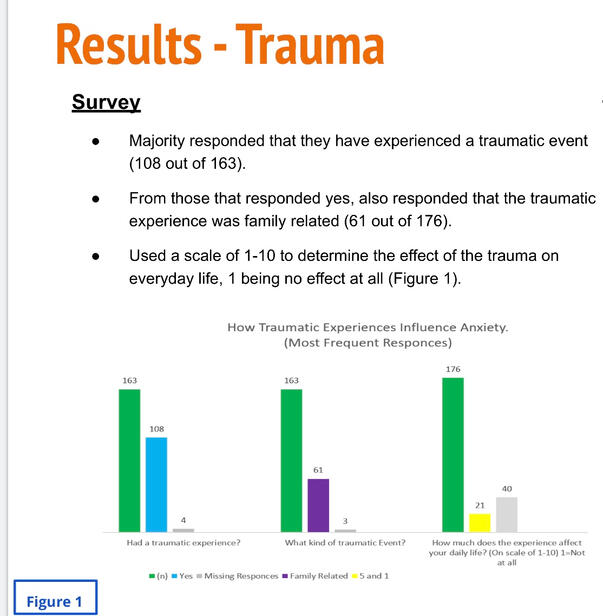
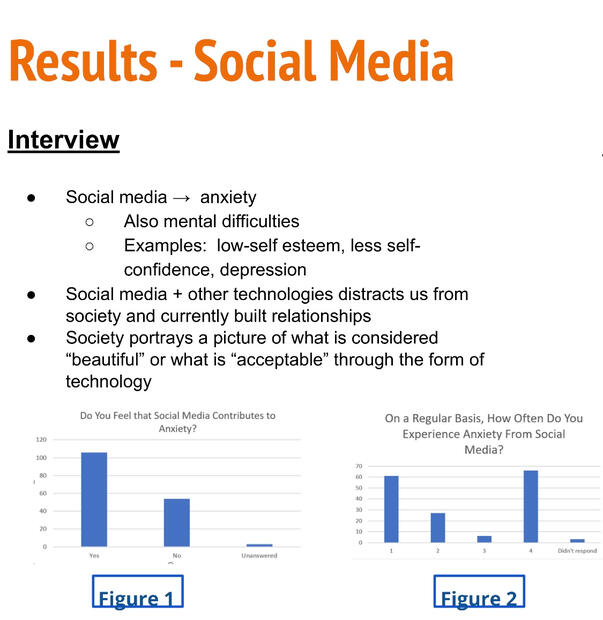
In the survey we made and posted on social media, 176 young adults between the ages of 14-18 experience some type of anxiety whether it comes from trauma, family problems, and social media.
Below are results of each category from a survey we conducted:
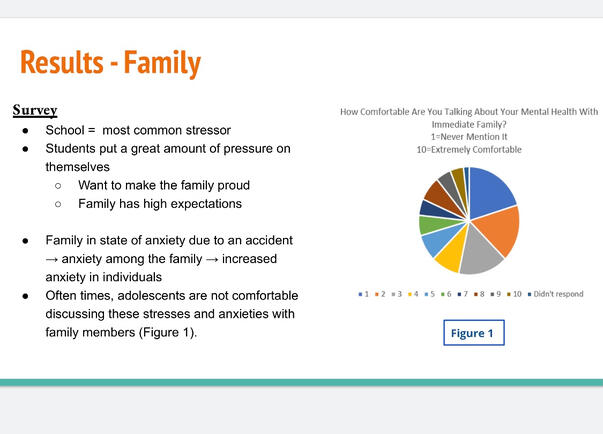
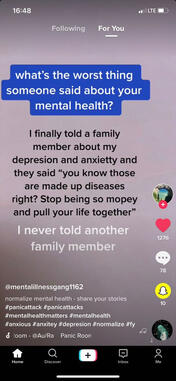
It is pretty hard for high school students and college students to talk about this with their parents because most of them just don't believe anxiety is a real thing which is a common issue in the adolescent population.
This can be seen in the TikTok image below
Common Triggers
-Trauma due to an accident, bullying, disasters, physical abuse.
-Stress
-Buildup of stress
-Abnormal fears (phobias)
How to deal with anxiety
-Take deep breaths
-Count to 10 slowly
-Learn what triggers your anxiety
-Talk to someone close to you or someone who doesn't know you
-Exercise
-Accept your anxiety
-Limit alcoholic beverages and caffeine
-Take time for yourself
-Eat well-balanced diets
-Get enough sleep
-Listen to calm music (ocean sounds, rain sounds, meditation music)
-Watch a happy movie to distract yourself
What happens in the body and in the mind during an anxiety attack?
During an anxiety attack, the hormone adrenaline floods into the bloodstream, putting the body on high alert. The heartbeat becomes faster, sending more blood to the muscles. The breathing becomes fast and shallow, as more oxygen is attempted to be taken in. During this, blood sugar levels go up.
When people feel anxious, certain regions of the brain, including the amygdala - the part of the limbic system, starts releasing stress hormones. It communicates with the hypothalamus, alerts the rest of the brain that danger is present, and triggers a fight or flight response.
How does anxiety affect mental and physical health?
-Short-term memory loss
-Difficulty concentrating
-Lowered immune system
-High blood pressure
-In rare cases a heart attack
-Emotional symptoms such as excessive worry, inability to relax, thoughts involving safety or death.
When anxiety disorders are left undiagnosed and untreated, certain areas of the brain decrease in size, such as the prefrontal cortex and hippocampus, which are where anxious feelings are registered and created. Due to anxiety, negative thinking can occur when those areas are weakened.
How it can affect day-to-day life
Some symptoms directly tied with Children and Adolescents with GAD that affect daily life:
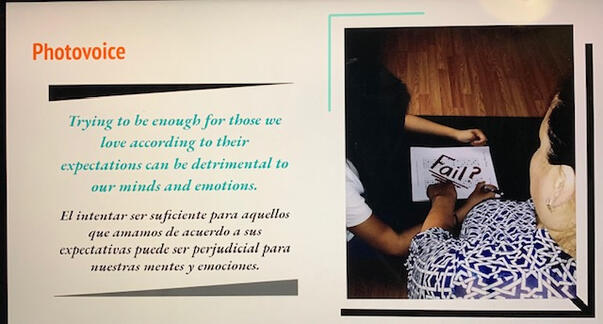
-Need for perfection
-Compromised confidence
-Focusing on possible disastrous events
-Focusing on specific details or things
-Avoiding social events/settings
-Seeking positive attention/validity from authority figures
-Anxiety attacks
How to know if someone is having an anxiety attack?
-Sweating
-Trembling
-They look like they are choking
-They look fearful
-Chest pain
-Shortness of breath
-Nausea
-Fatigue
-Personality changes (not enjoying what they used to like, not being up to do things they normally did, impulsive behavior, being insensitive and rude)
-Difficulty concentrating
-Being hypervigilant
-Avoiding activities, places, people associated with the triggering event (known as Post-Traumatic Stress Disorder-PTSD)
-Being unable to move
-Fainting
How to help during an attack
In order to help a person who is having an anxiety attack, you first must identify that it is in fact an anxiety attack. Signs of an anxiety attack may include but are not limited to:
-Increase in heart rate
-Feeling worried or scared
-Shortness of breath and a dry mouth.
-Tense muscles and feeling nausea or stomach ache
-Not feeling comfortable in one’s skin or having a sense of detachment from one’s surrounding
Once you have identified that the person is having an anxiety attack, the most important and first thing you can do is remaining calm, then follow these tips:
-Encourage and practice deep breathing with the person having the attack.
-Inhale for three counts, then exhale for three counts.
-Encourage the person to notice the things happening around them
-Have the person focus on a physical object nearby for ten seconds
-Have the person list 5 things they see/hear
-Keep in mind your word choice
-Avoid phrases/questions such as “are you OK?” “Calm down,” “This is really bad,” “It's all in your head,” etc/.
Decide if medical attention is needed
If the attack continues for more than 30 minutes, definitely seek medical attention, sometimes an anxiety attack or an excessive amount of stress can later develop into heart problems or coronary artery disease.
In a gentle non-judgemental way, discuss the attack after it has passed.
Focus on caring fror them and do not blame them for having an anxiety attack, also ask them if they have experienced the attacks before.
Anxiety Solutions of Reno
Dr. Jenna Sclachter, Psy.D., Anxiety and OCD Specialist (Founder). There are several other therapists available as well. Jenna-shlachter (More info)
They treat Generalized Anxiety Disorder, Panic Disorder and Agoraphobia, Obsessive-Compulsive Disorder, Social Anxiety Disorder.
Anxiety Solutions help both adults and children/teens.
Adults: Methods help to dramatically reduce anxiety, accomplish anything anxiety stops you from doing, feel normal again. Adults
Children/Teens: Methods help to dramatically reduce anxiety, help them keep on track in school, and what to do when the child is anxious. Children-teens
During the pandemic, Anxiety Solutions have remained open and are still accepting patients, but normal sessions are being conducted online over videochat. They use their own videochat platform. It is noted that videochat platforms are just as effective as in-person therapy.
Location: Reno, Nevada 89503. 85 Keystone Ave Suite 203
Contacts: Phone - (775) 300-7630
Email: [email protected]
Link to their Reno Office
Thrive Wellness of Reno
Thrive Wellness specializes in empowering and treating individuals throughout the lifespan with an emphasis on the following: eating disorders, perinatal mood and anxiety disorders, baby blues, anxiety disorders, obsessive compulsive disorders, and depressive disorders.
Thrive Wellness has been awarded accreditation by CARF International. CARF accreditation is a public seal of trust and commitment to quality based on internationally accepted standards.
Doesn’t accept medicare and medicaid plans.
Provides several support groups such as Perinatal Loss and Grief support group, Teacher support group, Perinatal Mental Health support group, Eating Disorder Recovery support group, and free Covid-19 impact support groups which is Virtual at this time.
Thrive Wellness owns a Facebook page, an Instagram account, and a Linkedin.
Locations: Plumb Address - 421 W. Plumb Ln. Suite I. Reno, NV 89509.
Roy House Address - 491 Court St. Reno, NV 89509.
Contacts:
Phone - 775.525.8103
Email- [email protected]
Fax- 775.525.8105
Link to their main page
Memor Health
Working Towards Balance
The main website includes background information on anxiety, available treatments, and how they treat Anxiety.
Memor Health uses a variety of mental health professionals who use psychiatry, therapy, and other holistic options to create a plan for a patient. Thier psychiatrists and therapists work together to understand what medications, coping skills, and therapies would work best for each patient.
Memor Health treats five major types of anxiety disorder including Generalized Anxiety Disorder, Obsessive-Compulsive Disorder, Panic Disorder, Post-Traumatic Stress Disorder, and Social Phobia, or Social Anxiety Disorder.
Some services offered are Teletherapy (Telepsychiatry / Telehealth), Eye Movement Desensitization and Reprocessing (EMDR), Medication Management, Therapy, Psychotherapy
Teletherapy: Online therapy, also known as e-therapy, e-counseling, teletherapy, or cyber-counseling, involves providing mental health services that can be accessed via a desktop computer, laptop or smartphone. They own their own app for video chat, its security is HIPPA compliant and fully encrypted. Teletherapy sessions work much the same way as traditional therapy sessions with only one significant difference–the therapist and the client are not in the same room. As with face-to-face therapy, a client may seek out the therapist for one session to deal with a current life situation, or they may agree to on-going sessions.
Memor Health accepts most forms of Insurance excluding Medicare and Medicaid plans
Office Hours: Monday – Friday: 9:00 am – 5:00 pm. Closed Saturday and Sunday
They offer a resource page for those experiencing an emergency or in need of immediate medical help.
Link to their Resources Page
Location: 10405 Double R Blvd. Reno, NV 89521
Contacts: Phone - 775.827.2400
Link to their Therapy page
Crisis Support Services of Nevada
Crisis Support Services is a 24 hour hotline. It is not directly targeted to anxiety but sometimes anxiety can develop into depression, and sometimes can be a dual diagnosis. People have the ability to call or text.
Call 1(800)273-8255
Text CARE to 839863
For more information go to their website:
Crisis Support Services of Nevada
Carson Community Mental Health
Carson Community Mental Health has individual and family counseling. They have counseling for children of all ages, and also have Spanish-speaking counselors available.
Location: 1665 Old Hot Springs Rd., Suite 150. Carson City, NV 89706
Contact:
Phone - (775) 687-4195
Carson Tahoe Behavioral Health
Carson Tahoe Behavioral Health provides inpatient and outpatient mental health services to adults and any aging adults dealing with mental health and substance abuse issues. They offer cost-effective treatment options for seniors, adults, and adolescents close to home.
Link to their Home page
Location: 1080 N. Minnesota Street. Carson City, NV 89703
Contacts:
Phone- (775)445-7350
Toll-Free- (800)283-7671
Credits go to the following platfroms:
What is Anxiety Link
The Causes and Triggers
Coping Strategies
What happens in the body
What happens to the mind
How does anxiety affect mental and physical health
How it can affect day-to-day life
How to know someone is having an anxiety attack
How to help
How to help part 2
About Us
Hello! We would like to say thank you for taking time out of your day to look at our knowledgable website! We hope you learned something new from the information we have provided for you!
We are student researchers a part of the Community of Bilingual English-Spanish Speakers (CBESS) program at the Univeristy of Nevada, Reno. Our sole mission with this website was to inform the community on how Anxiety affects the adolescent population, how to idenitfy it and help those who are experiencing anxiety whether it is once in a while or daily. We really do hope that you take advantage of the information provided and help yourself or someone you care about.
-Thank you so much!